

 Link to our Family Handbook
Code of Conduct:
Our Mission
Together, the Marie Sharpe School community is committed to fostering a safe, caring, and respectful environment that promotes purposeful learning, individual growth, and lifelong success. Our Code of Conduct helps ensure this by encouraging all students to respect themselves and others, act responsibly, and strive to do their personal best in every aspect of school life.
Code
A safe, caring and orderly school environment is of paramount importance for the staff and students at Marie Sharpe Elementary (MSE). Marie Sharpe promotes the values expressed in the BC Human Rights Code respecting the rights of all individuals in accordance with the law - prohibiting discrimination based on race, colour, ancestry, place of origin, religion, marital status, family status, physical or mental disability, sex or sexual orientation. It is expected that there should be no acts of discrimination in any regard, including publications, accommodation, service and facility in the school environment. The board and the school community will take all reasonable steps to prevent retaliation against a student who has made a complaint of a breach of this Code of Conduct. Efforts will be taken to maintain the dignity and right to privacy of members of our school community. Students, staff members, parents, caregivers, and coaches are required to meet the expectations outlined in this Code of Conduct.
Circle of Courage
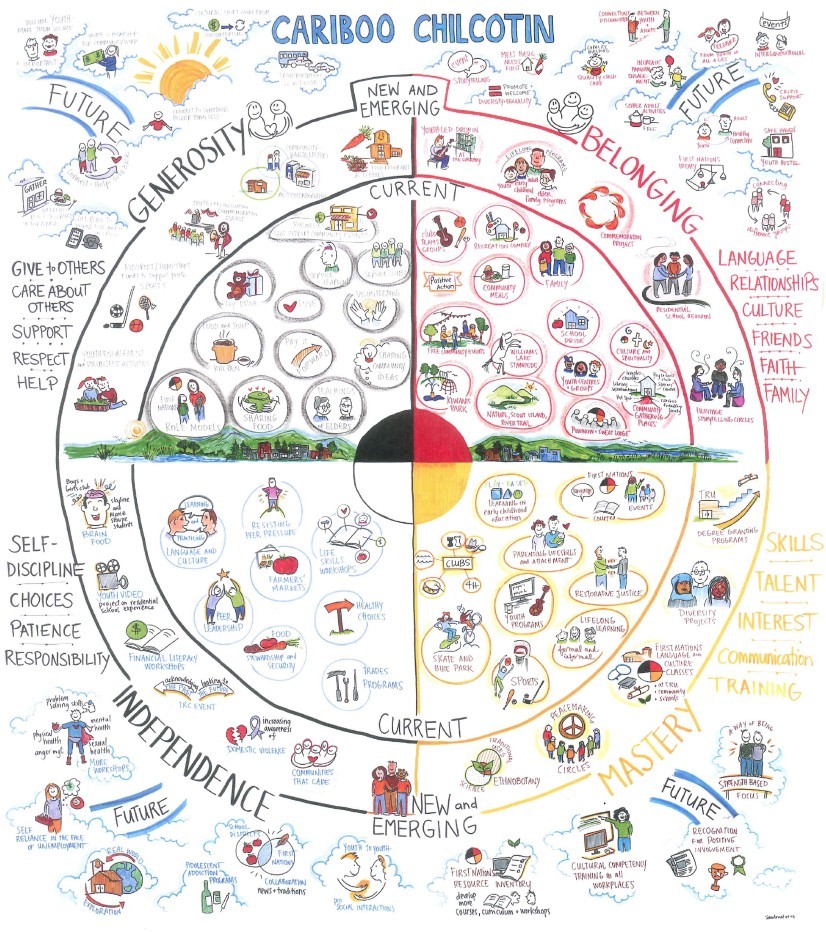
The general standard of behaviour for students falls under the following guidelines: Students must behave according to a Code of Conduct which recognizes the rights of:
- All students to learn
- School staff members to perform their duties
- Staff and students to work and learn in a safe environment
- Staff, students, and parents to be treated respectfully.
The expectations of this code of conduct are intended to include all school-related activities while students are attending school, travelling to and from school, and while attending any school function at any location.
Marie Sharpe Elementary community members…
- are RESPECTFUL,
- are ACCOUNTABLE,
- are INCLUSIVE and WELCOMING.
Expected general guidelines for behaviour of Marie Sharpe Elementary School students:
Belonging - I can be a respectful part of a group. Belonging is an understanding that you are significant and that relationships of trust are important, so that you can say, “I am loved.” |
- Care about the feelings of others and help those who are hurt or in need - Respect the feelings, rights, boundaries and bodies of others - Give people their space when they need it for thinking, learning, and working - Be inclusive and welcoming, make sure no one feels left out |
Mastery - I can set and achieve goals. Mastery is an understanding that you are capable and that you are learning to cope with the world, so that you can say, “I can succeed.” |
- Learning takes time and patience - Achieve through a growth mindset - Set personal goals and make plans to achieve them - Take pride in your achievements and celebrate growth - See mistakes as opportunities to learn |
Independence - I can be independently responsible. Independence is an understanding that you are powerful on the inside and that you have the will to make choices, so that you can say, “I have the power to make decisions.” |
- Be mindful of the consequences of your actions - Lead by example - Know yourself - be a self-regulated learner - Be a creative, critical, and flexible thinker - Make safe and healthy choices |
Generosity - I can contribute positively to others. Generosity affirms that you are a genuine human, and that your character is nurtured by concern for others, so that you can say, “I have a purpose for my life.” |
- Be generous with your talents - Be willing to share - Respect and take care of our environment - Be helpful and cooperative - Stand up against injustice - Solve problems in a fair and peaceful manner |
Unacceptable Conduct
Refer to General Definitions for “bullying behaviour,” “cyber bullying,” “harassment,” “intimidation,” “racism,” & “progressive discipline” definitions.
Any behaviours that are in contravention of the student expectations listed above are considered unacceptable conduct.
Students must refrain from swearing, lying, cheating, stealing, littering, interrupting the learning environment, being disrespectful, school bus misconduct, leaving learning environments without permission, running through the school hallways, using hands-on behaviour, and meeting or loitering in school restrooms.
Students must also refrain from bringing or consuming sugary drinks such as pop and energy drinks while at school. If they do, the drink will be kept in the office for the student to pick up at the end of the day.
Students will be held responsible for damage to school property, including buildings and equipment, whether willful or negligent.
The school has no tolerance for any type of discrimination including racism and gender violence, bullying, threatening, intimidation, harassment, use or possession of weapons, assaults or the pre-meditation of violence in person or online and may result in immediate discipline and/or suspension.
Possessing or using any type of weapon, explosives, fireworks, firecrackers, tasers, bear/pepper sprays or any other items capable of or intended to be used to threaten, intimidate or cause bodily harm, including fake weapons that can be perceived as real weapons may result in immediate discipline and/or suspension.
Drugs and drug paraphernalia, alcohol, tobacco products, and electronic cigarettes (ie. vapes, dab pens, etc.) are not tolerated or allowed on school property at any time. Students who are under the influence of, possess, use, gift, provide to other students, or sell illicit substances will be the subject of appropriate disciplinary action including suspension and their conduct may be reported to the authorities. The school recognizes that some substances may create dependencies that are treatable conditions.
The Marie Sharpe Elementary Code of Conduct is aligned with district policies, administrative procedures and the BC Human Rights Code. Marie Sharpe Elementary promotes the values expressed in the BC Human Rights Code, respecting the rights of all individuals in accordance with the law - prohibiting discrimination based on, “Indigenous identity, race, colour, ancestry, place of origin, religion, marital status, family status, physical or mental disability, sex, sexual orientation, gender identity or expression, age or lawful source of income of that person or class of persons, or of any other person or class of persons' (BC Human Rights Code).
All unacceptable behaviours listed in this Code of Conduct are not exhaustive, but are cited as examples.
Consequences for failing to comply with behavioural expectations:
When students demonstrate behaviour that is not in keeping with the ideas described above, a discipline response that is based on learning and restoration (making amends) is implemented. At Marie Sharpe Elementary we reflect upon our choices, take responsibility for our actions, and make amends through a restorative action plan with consideration of the developmental levels, age, maturity and diverse needs of students.
Level 1: Initial and/or Minor Incidents:
Students can make mistakes; it’s a natural part of the learning process. At these times we aim to acknowledge and learn from these mistakes. Most of these choices are minor and can be solved with the teacher and student(s) and may involve a small group or class meeting. A review of the Circle of Courage’s qualities may be part of the restorative plan along with a decision - made with the student and the teacher - about appropriate restorative action (apology, act that gives back to the individual/classroom/school).
Level 2: Repeated Behaviour:
At this point a discussion takes place with the student, teacher and principal or designate. The qualities of the Circle of Courage are reviewed with the student so they can assess their mistakes. A collaborative decision will be made about appropriate restorative action and the student completes a “Make Amends Plan” and a copy is sent home. The teacher or principal/designate may also request a meeting with the parents (or vice-versa).
Level 3: Serious Problems/Refusal to change:
The Circle of Courage presents opportunities for children to learn how to deal with conflict effectively. It is often during these bouts of conflict that children act in ways that are inappropriate or unacceptable.
Responses to escalated breaches of the Code of Conduct will vary based on the severity and context of the violation. There will be communication between the teacher(s), parent(s), student(s), and principal. The principal or designate will determine the level of intervention for the student(s) to succeed in school. There will be consideration for others impacted in the school community. There may be the possibility of in school/out of school suspension.
Rising Expectations:
Students are expected to learn and mature as they move through successive grades, and as such the expectations progress towards increasing personal responsibility and self-discipline, as well as increasing or progressive consequences for inappropriate conduct/unacceptable behaviour.
Fair Notice:
At Marie Sharpe Elementary, we are committed to maintaining a safe and caring learning environment. Any behaviour that poses a risk to the safety or well-being of others, including threats, acts of violence, hate-motivated behaviour, or persistent bullying, will be taken seriously. Our Threat Assessment Team, which includes school staff and community partners, works together to ensure that all concerns are addressed promptly and that the emotional and physical safety of every member of our school community is protected.
For our extended policy on Fair Notice please refer to Appendix A. and/orthe Fair Notice page on our website.
Digital Devices:
Refer to General Definitions for “personal digital device” and “Artificial Intelligence (AI)” definitions.
We recognize that limiting personal digital device use while at school helps promote a focused learning environment and increases online safety. Our general expectation is to please leave all electronics and valuables at home. The school will not be responsible for any missing items.
Devices should not be accessed or used during school hours and will remain secured away. Specifically, students are not permitted to leave the classroom with their device during class time or break times and are not permitted to have them in bathrooms. Classroom teachers may set an appropriate range of classroom strategies for restricting the use of digital devices. There may be times when devices are used specifically for instructional purposes and digital literacy, allowing for students’ ages and developmental stages. Considerations will be made in regard to accessibility and accommodation needs, medical and health needs, and equity to support learning outcomes.
Students who fail to adhere to the school and classroom guidelines for digital devices may:
- Have their device taken away
- Be prohibited from having a device on school property
- Be suspended in accordance with AP 320 - Student Suspensions
Student Rights – Digital Devices
All students have the right to a reasonable expectation of privacy while at school. This includes being free from surreptitious recording, such as audio or video recordings, or livestreaming made without the knowledge or consent of the other person involved.
Serious breaches of the Code of Conduct:
Suspensions: In accordance with the School Act, Sec. 85(2)(ii) and (d), and SD27 AP 320, the Board authorizes the Principal or designate of any school in the district to suspend a student from attendance at school for up to five days. Suspensions may be for the following reasons:
- A student is willfully and repeatedly disrespectful to a teacher or to any other employee of the Board carrying out responsibilities approved by the Board.
- The behaviour of the student breaches the District Code of Conduct or policy and/or has a harmful effect on others or the learning environment of the school.
- For example, (POLICY – 311 ILLICIT SUBSTANCES) Students who are under the influence of, possess, use, gift, provide to other students or sell illicit substances will be the subject of appropriate disciplinary action and their conduct may be reported to the authorities.
- The student has failed to comply with the School Code of Conduct.
Suspensions over five days are made in consultation with the appropriate Director of Instruction as per District Policy. Serious breaches of conduct that threaten the safety and welfare of others will be referred directly to an indefinite suspension including a review from a representative of the Superintendent.
Please refer to AP 320 Student Suspensions for the official CCSD27 Policy.
Family Involvement
Under the Freedom of Information and Privacy Protection Act and/or other relevant legislation, it may be necessary to advise other parties of serious breaches of the District Student Code of Conduct. Marie Sharpe Elementary’s Code of Conduct was established to ensure each child and staff member’s safety. We ask for student and parental support in honouring our commitment to ensuring the safest learning environment for all. Parents can help in the following ways:
1. Discuss the Code of Conduct with your child.
2. Be in close contact with your child’s teacher.
3. If you have any questions, please phone the school (250-392-4104).
Special considerations may apply to students with diverse needs if these students are unable to comply with a code of conduct due to having a disability of an intellectual, physical, sensory, emotional or behavioural nature.
Protection Against Retaliation
The school and the Board of Education will take all reasonable steps to ensure no person faces retaliation from another for making a complaint resulting in a breach of the Code of Conduct.
Active Teaching and Promotion of Expectations
The Code of Conduct will be communicated to staff and students via the Student Handbook supplied at the start of each school year. Students will be reminded throughout the year at monthly Celebration Assemblies. Teachers are responsible for developing their own Classroom Management Plan. Within this plan, there will be classroom expectations, classroom recognition, and classroom consequences that will be explained to all students at the beginning of the year and that are consistent with and complement the School Code of Conduct. Teachers will actively teach the Code of Conduct in their classrooms, with the focus being teaching prosocial behaviours to prevent breaches of the Code of Conduct. The school will teach, encourage, and celebrate positive social and emotional competencies and recognize students striving for personal academic excellence throughout the year.
Distribution, Development and regular review:
The School Code of Conduct is annually developed, reviewed, and distributed to staff, parents, guardians, and students to ensure it meets the Ministry requirements and the needs of Marie Sharpe Elementary.
Communicating Expectations
Student expectations for appropriate behavior will be communicated regularly in classrooms, athletic programs, school clubs, administrator visits, student handbooks, announcements, and school wide assemblies. The Code of Conduct will be posted in the school, on the school website, emailed to parents and guardians, and highlighted in school newsletters and PAC meetings. Family Handbooks are available at the office and posted on the school website.
Staff members will be provided a copy of the school’s Code of Conduct in the Staff Handbook. Temporary staff are provided with a copy of the school’s Code of Conduct in the TTOC Handbook.
ERASE Report It tool
Below is the link to the ERASE Report It Tool, the anonymous online provincial reporting tool that students can use to report any situation that make them feel unsafe while at school.

ERASE Report It Tool Link
General Definitions
Personal digital device - means any personal electronic device that can be used to communicate or to access the internet, such as a cell phone, a tablet, a smart watch, or any artificial intelligence device (such as AI glasses). This may also include the use of wired or wireless headphones or AirPods.
Artificial Intelligence (AI) - is a digital tool that uses data to learn, solve problems, and make decisions things that usually only people can do.
Bullying behaviour - a pattern of repeated aggressive behaviour, with negative intent, directed from one person to another where there is a power imbalance. Bullying behaviour is a type of harassment and intimidation. This aggressive behaviour includes physical or verbal behaviour and is an intentional and purposeful act meant to inflict injury or discomfort on the other person.
There are three critical conditions that distinguish bullying from other forms of aggressive behaviour including:
- Power: involves a power imbalance. Individuals who bully acquire their power through physical size and strength, including status within the peer group, and/or by recruiting support of the peer group.
- Frequency: is repeated over time. Bullying is characterized by frequent and repeated attacks. It is this factor that brings about the anticipatory terror in the mind of the person being bullied that can be so detrimental and can have the most debilitating long-term effects.
- Intent to harm: is intended to hurt. Individuals who bully generally do so with the intent to either physically or emotionally harm the other person.
Cyber bullying - bullying behaviour which is carried out through an internet service such as email, chat room, blog, discussion group or instant messaging. It can also include bullying through mobile phone technologies and new internet technologies in the future.
Harassment - any unwelcome or unwanted act or comment that is hurtful, degrading, humiliating, or offensive to another person is an act of harassment. Of particular concern is such behaviour that persists after the aggressor has been asked to stop. Any of the following behaviours could be considered harassment:
- condescending treatment that undermines another's self-respect, name-calling, teasing, disrespectful comments
- gossiping, spreading malicious rumours·, "dirty" looks, social ridicule, public embarrassment
- social isolation ("freezing out" or rejecting others), exclusion from a group, threatening to withdraw friendship
- repeated unwanted communication
- unwelcome jokes, innuendoes, insults, or put downs; taunts about a person's body, disability, religion, attire, age, economic status, ethnic or national origin
- insulting graffiti directed at an individual or group
- unwanted and uninvited sexual attention, particularly when it is intimidating, hostile, or offensive to the recipient.
Intimidation - Intimidation is the act of instilling fear in someone as a means of controlling that person. For example, any of the following behaviours could be considered intimidation:
- verbal threats: threatening phone calls, threats of violence against a person or property
- physical threats: showing a weapon, jostling, threatening to punch, stalking or following
- defacing or stealing victim's property
- daring or coercing victim to do something dangerous or illegal
- extortion {demanding payment or goods for a victim's safety)
- inciting hatred toward a victim
- setting up a victim to take the blame for an offence
Progressive Discipline - uses gradual consequences to address inappropriate behaviour to teach pro-social behaviour.
Racism - a set of mistaken assumptions, opinions and actions resulting from the belief that one group of people categorized by colour or ancestry is inherently superior to another. Racism may be present in organizational and institutional policies, programs and practices, as well as in the attitudes and behaviour of individuals. It results in the inequitable distribution of opportunity, benefit or resources across ethnic/racial groups.
Safe schools - schools in which members of the school community are free of the fear of harm, including potential threats from inside or outside the school. The attitudes and actions of students, staff and parents support an environment that is resistant to disruption and intrusion and enables a constant focus on student achievement.
Caring schools - schools where it is known that a sense of belonging and connectedness - not just for students, but for everyone in the school community- is a necessary element in the creation and maintenance of a safe learning environment. Caring schools are ones in which members of the school community feel a sense of belonging and have opportunities to relate to one another in positive, supportive ways. All aspects of school life embrace and reflect diversity. The school is an inviting place for students, staff, parents and visitors. Staff members make conscious and concerted efforts to help other members of the school community feel connected.
Orderly schools - schools that are free from chaos and confusion, and alive with the sights and sounds of purposeful learning activities. Routines for repetitious activities are well established so students' minds and bodies are free to focus on the learning and development work at hand. A businesslike atmosphere exists, yet there is creativity and fun in abundance. Everyone in the school has work to do and does it in a timely way - and in a way that doesn't interfere with the learning and development of others. Everyone feels a sense of meaningful accomplishment, and feels the school is a good place to be. All members of the school community are informed about and exercise their rights and responsibilities as school citizens.
Resources:
- MSE Code of Conduct Document
- MSE Family Handbook
- AP 320 Student Suspensions
- POLICY – 311 ILLICIT SUBSTANCES
- Digital Device FAQs 2024
Useful links:
- ERASE Report It Tool
- Fair Notice
- BC Ministry of Education – Cell Phones
- Circle of Courage
- Freedom of Information and Privacy Protection Act
- BC Human Rights Code